
The complete guide
Choosing a Compact Golf Rangefinder for Your Round
When a distance check would help
Standing over a shot with an uncertain distance can make club selection harder than it needs to be. Course markers can be useful, but you may want a reading to a particular target rather than a general reference point. A compact golf rangefinder gives you another source of information before you decide how to play.
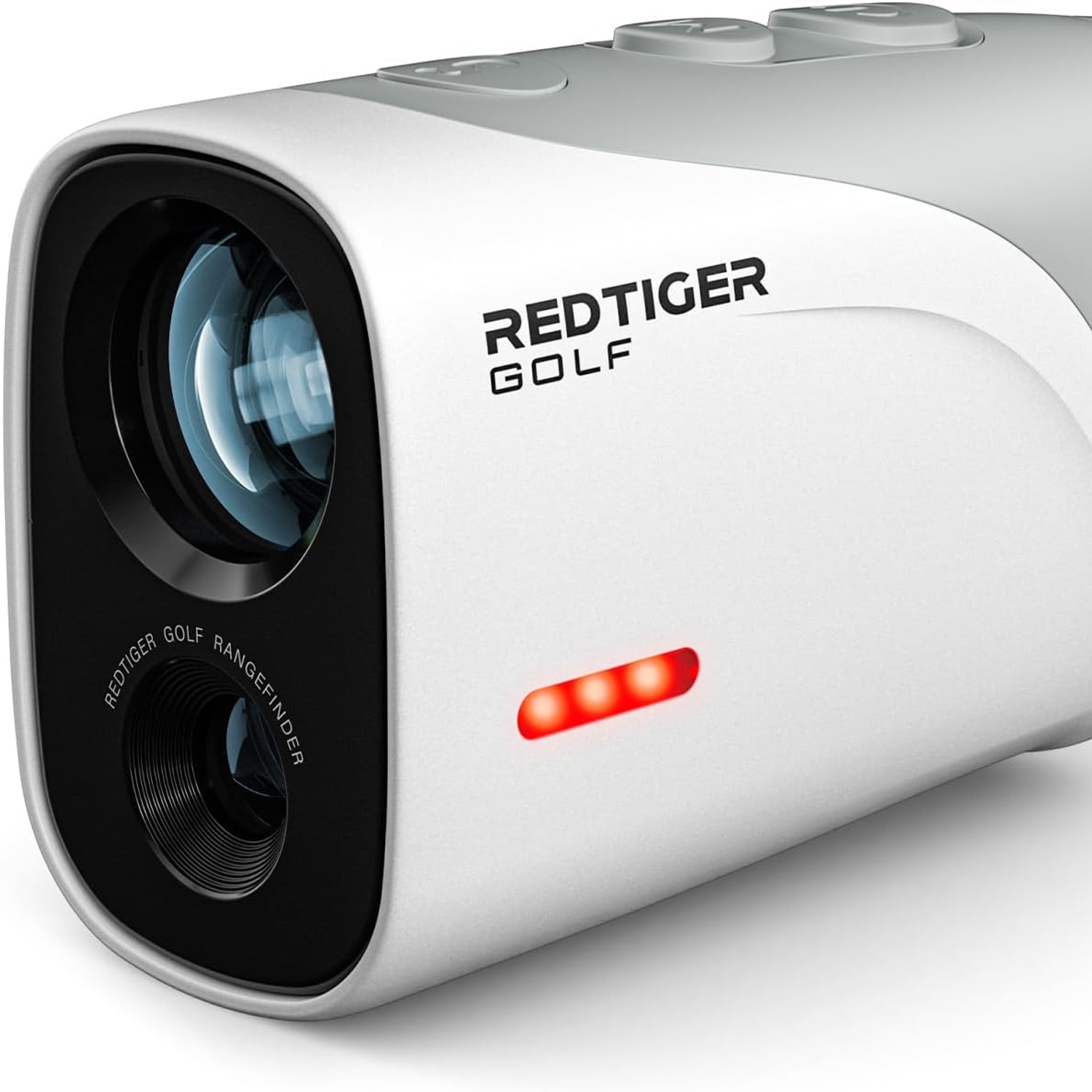
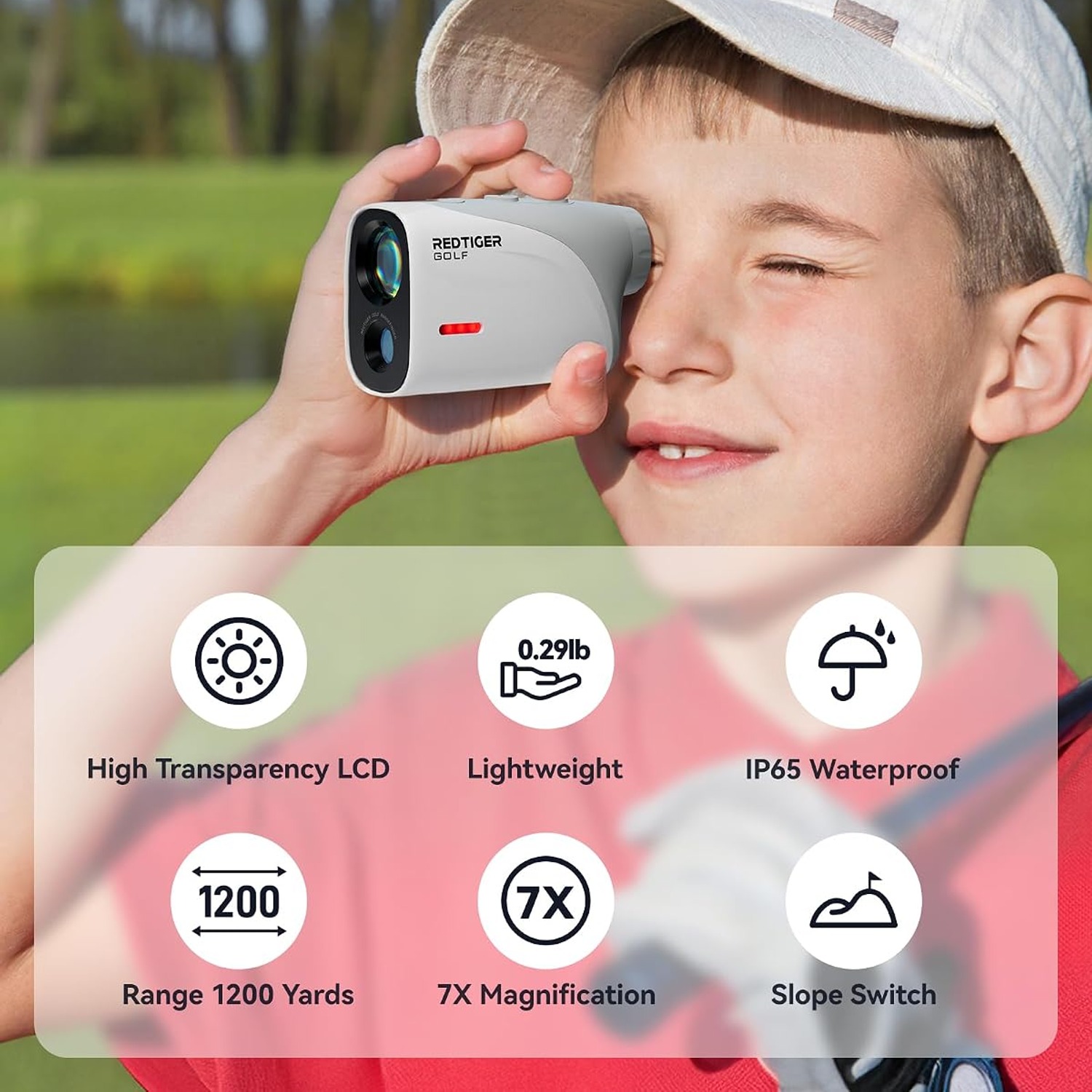
This model brings a laser distance reading, 7x magnification and a slope switch into a body weighing 0.13 kg. It also includes flagpole lock vibration and a rechargeable battery. The point is not to remove judgment from golf. It is to give you a distance reading that you can consider alongside the lie, weather and your own club distances.
Before buying, think about how you would carry it, when you would charge it and which features you would actually use. Those everyday details matter as much as the maximum range.
How a laser distance reading fits into play
A laser range finder for golf is aimed at a target to measure its distance. You look through the device, place the target in view and use the controls as directed in its instructions. The display then provides the reading.
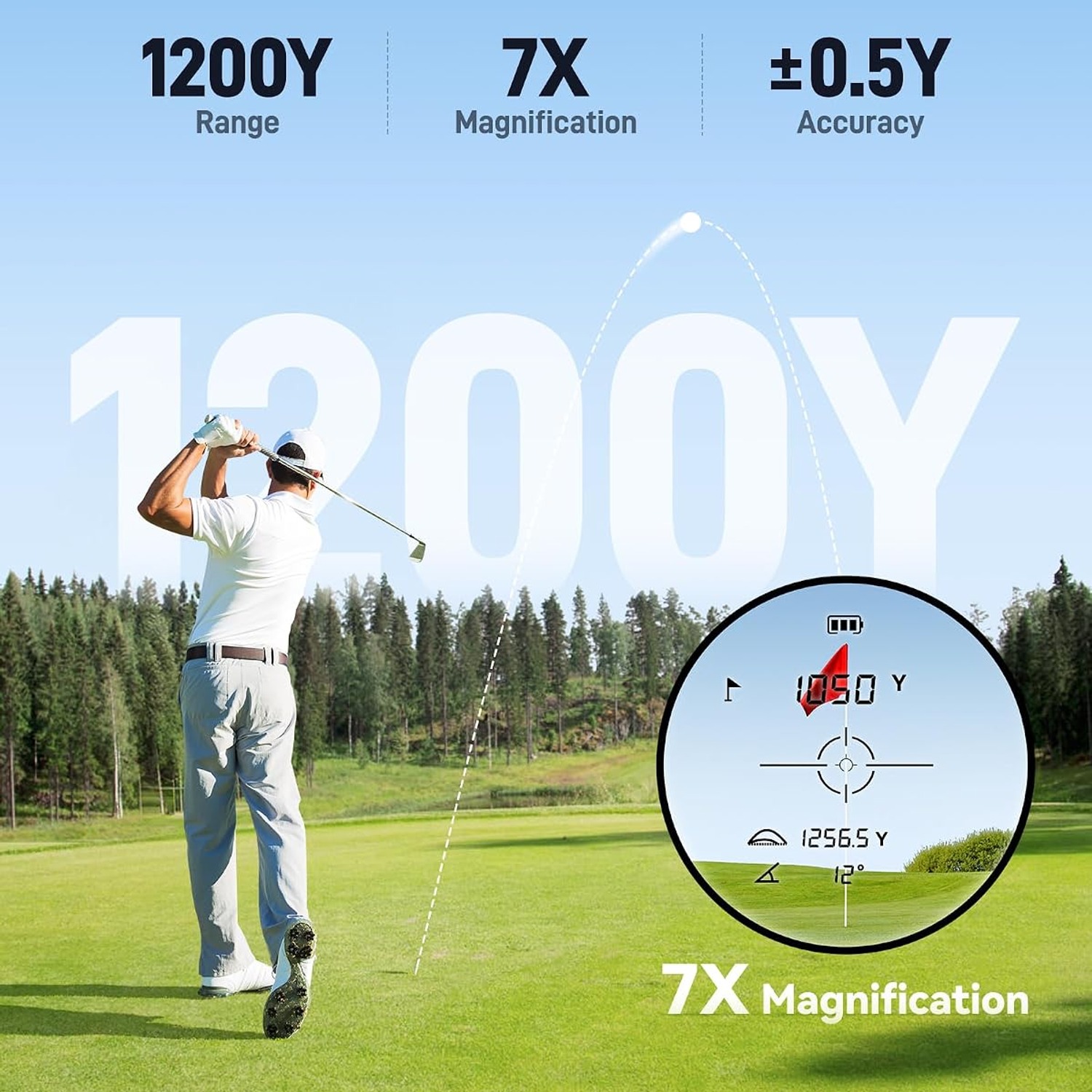
This unit lists a measuring range of 5 to 1200 yards and accuracy of ±0.5 yards. Those figures describe the stated capability of the device. They do not mean you should expect a flag reading at the far end of that range in every setting. The maker does not give separate ranges for flags, trees or other targets.
Once you have a reading, you still need to decide what it means for your shot. Your usual carry distances remain important. A golf distance finder adds information, but it cannot know how you will strike the ball.
Understanding the view and flag feedback
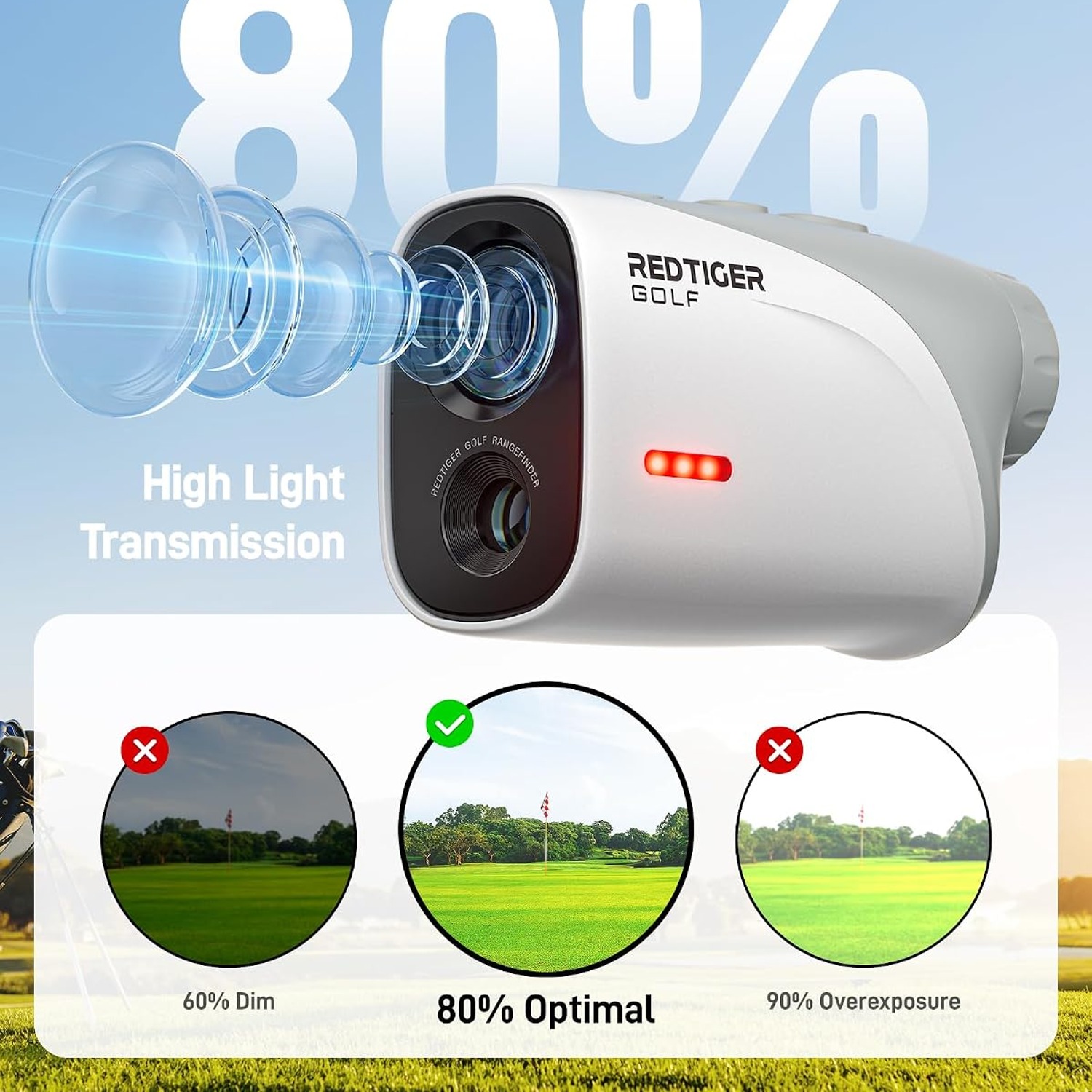
The 7x magnification enlarges the view when you aim. That is useful to consider if you want a clearer look at the target rather than relying only on your unaided view. The listed display is a high-transmission LCD, with 80% light transmission stated in the maker details.
Flagpole lock vibration is another feature to weigh up. A pin seeker rangefinder with this feedback gives a physical signal when flagpole lock occurs. It provides a cue without requiring you to judge the display alone.
Take time to learn that feedback before depending on it during a round. Read the instructions and practice aiming at clear targets. The maker does not explain every display symbol or control sequence, so those details should come from the manual rather than guesswork.
Deciding whether you want slope
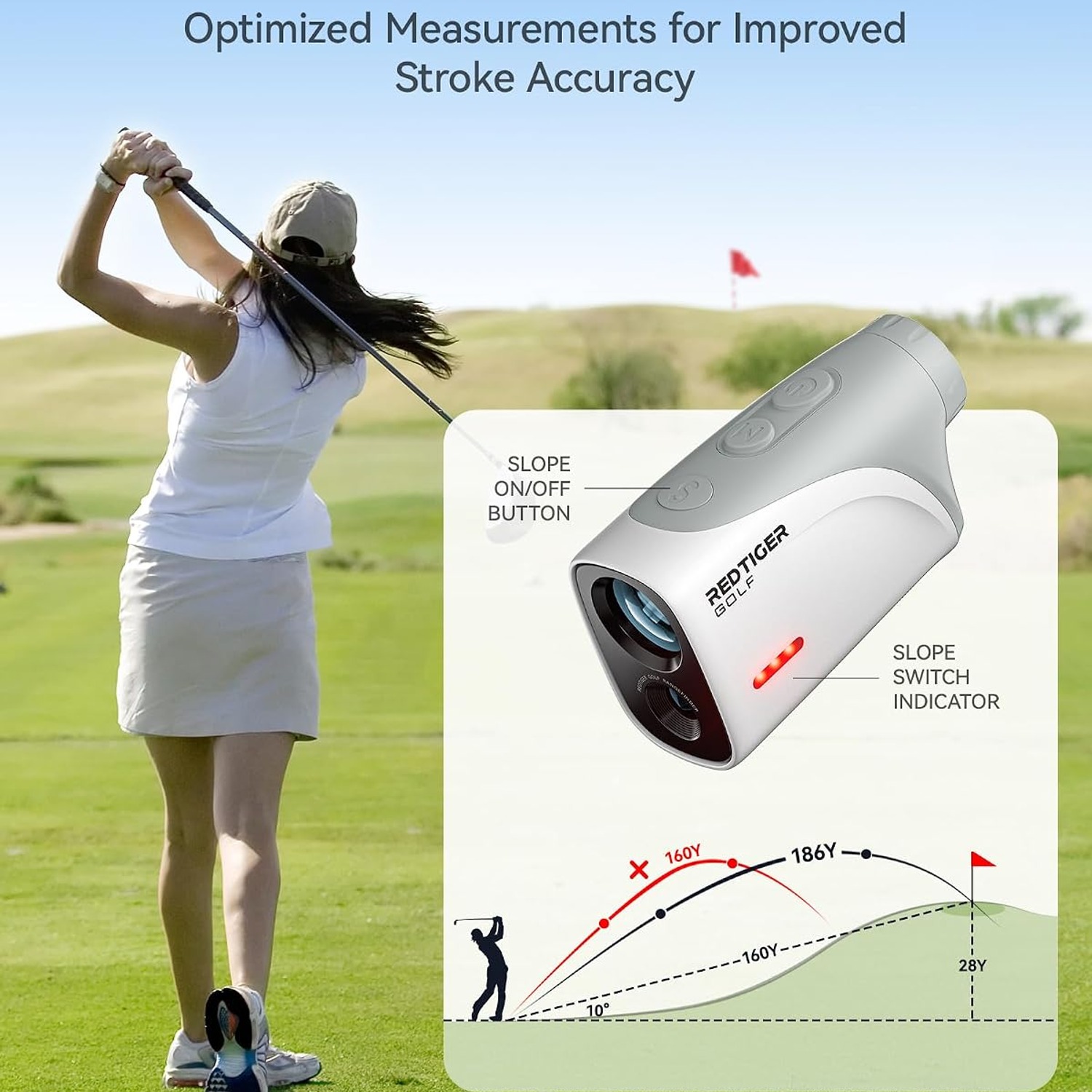
A golf rangefinder with slope switch lets you choose whether slope compensation is active. The feature accounts for elevation differences when providing an adjusted distance. That can be useful when you want to compare a direct measurement with slope-related information.
The important buying question is whether you want that option and will remember to check its setting. If you play in organized events, find out which devices and functions are permitted before use. Do not assume that having a physical switch makes any device acceptable under every set of event rules.
Outside that question, think about how you learn. Some golfers want a straightforward distance check. Others want to consider elevation as part of their planning. Choose based on your use, not simply on the number of features listed.
Checking the size against your carrying habits
This unit measures 3.58 inches long, 1.5 inches wide and 2.17 inches high. Its listed weight is 0.13 kg. Those measurements give you a better starting point than the word compact alone.
If you want a pocket golf rangefinder, compare the dimensions with the actual pocket you plan to use. Consider whether it will sit comfortably when you bend or walk. A jacket pocket, trouser pocket and golf bag compartment each place different limits on shape and access.
A portable case is included, along with a magnetic belt. Magnetic mounting is also listed. Think through where you would keep the device between shots and how you would remember to collect it at the end of play. A carrying method only helps if it suits your habits.
Making rechargeable power work for you
This rechargeable golf rangefinder has an 800 mAh battery and USB-C charging. The stated runtime is up to 14 hours of continuous use. It also shuts off automatically after 15 seconds of inactivity.
These details make charging part of ownership. A simple approach is to check the battery before you pack for a round rather than waiting until you arrive. For a golf trip, include charging in your packing plan instead of assuming a previous charge will cover every day.
Charging time is not specified. A USB-C cable is also not named in the included-components list, so do not assume one is supplied. Confirm what you need before ordering if you do not already have suitable charging equipment, and follow the instructions supplied with the unit.
What water resistance does and does not mean
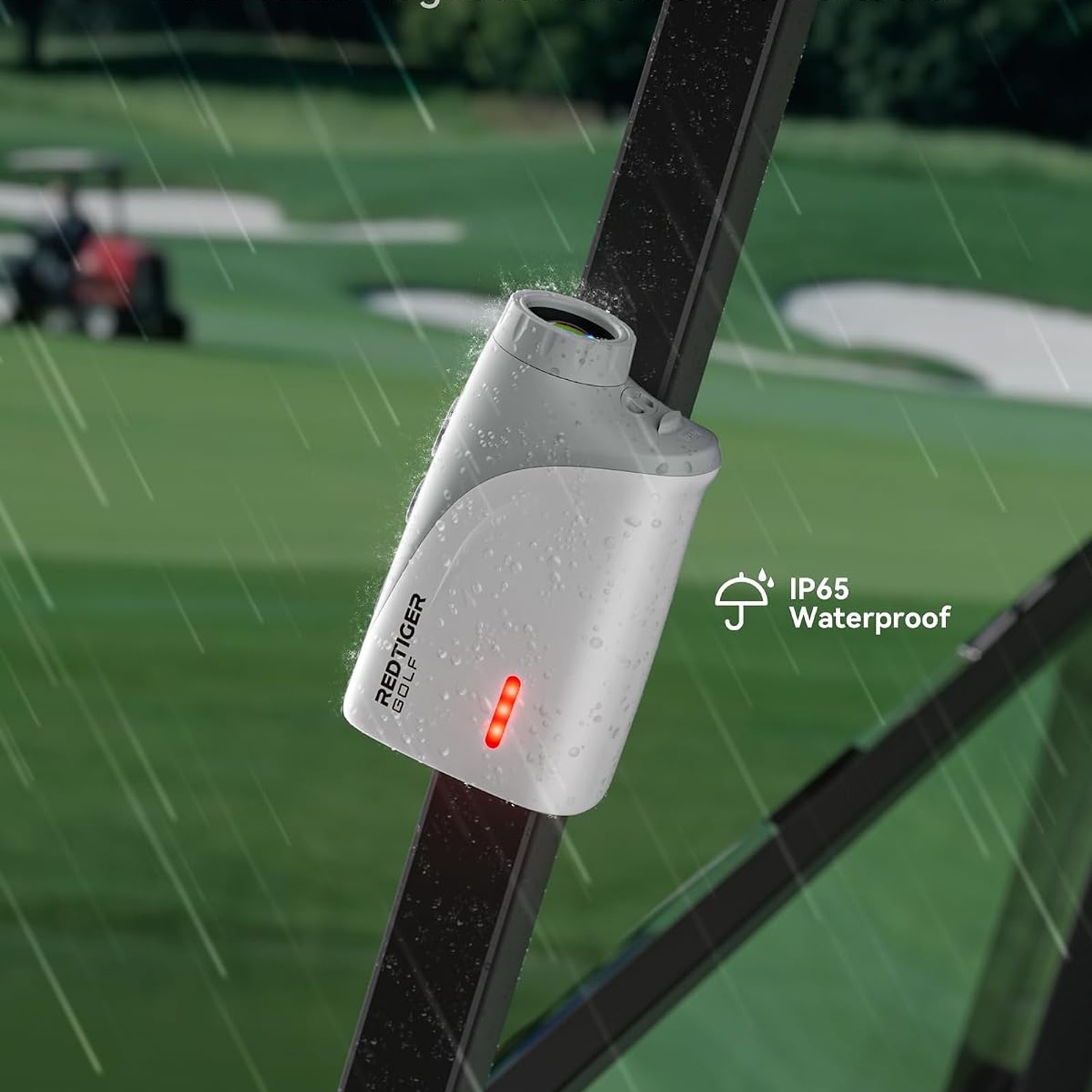
The body has a listed IP65 rating. That is a useful detail when comparing a water resistant golf rangefinder with a model whose protection is not stated. It is still sensible to keep water exposure limited where you can.
Do not treat water resistance as an invitation to soak or immerse the device. After damp conditions, wipe it down and let it dry before closing it inside the case. Keep the charging connection clean and dry, too.
The maker details identify the white body material as polycarbonate. That tells you the listed body material, not how the unit will handle every knock or fall. Use the case between outings and avoid leaving the rangefinder loose where heavier equipment could press against it.
Who this model may suit
A golfer who walks and prefers less weight may find the 0.13 kg specification appealing. Someone who already charges golf accessories may also prefer a USB-C golf rangefinder over managing replacement batteries.
It may suit a newer player who wants to connect measured distances with club selection during practice rounds. There is still a learning step. You need to become familiar with the controls, confirm what you are aiming at and build an honest picture of your own shot distances.
For an experienced golfer, the decision may come down to carrying style and preferred feedback. Consider whether you want vibration on flag lock, magnetic mounting and slope control. If a different feature is essential to you, check it directly rather than assuming it comes with a compact design.
What to confirm before ordering
Start with the features you cannot compromise on. The maker states the range, magnification, battery capacity, body dimensions and water-resistance rating.
The listed carrying accessories are a portable case and magnetic belt. The maker also names the high-transmission LCD and slope switch among the included components, though these are device features rather than separate carrying accessories. Do not read that list as a promise of extra chargers or spare parts.
A two-year manufacturer warranty is listed. Read the full terms if warranty coverage is important to your choice, including how a claim is handled. Check the current delivery estimate for your address as well, especially if you need the item before a trip.
Giving it as a golf gift
A golf rangefinder gift works best when it fills a known gap. Ask whether the recipient already uses a laser device and whether they would welcome rechargeable power. Some golfers have firm preferences about size and where they carry their equipment.
The included case gives them a storage option, but the fit with their routine still matters. If the gift is for an upcoming round or holiday, allow for the delivery estimate shown when ordering. The maker does not provide a fixed arrival window.
Keep the return period in mind when choosing when to buy. Change-of-mind returns run for 14 days from delivery, with return postage paid by the customer. Consumer protection rights under your state's law also apply.
Care that fits into a normal routine
After use, remove loose grit before cleaning the lenses with a suitable lens cloth. Wipe the body gently with a soft cloth. Avoid rough fabrics or cleaning methods that could damage the viewing surfaces.
Let moisture dry before putting the unit away. Keep the charging connection free of dirt, and use the supplied instructions for charging and longer storage. These are small tasks, but they are easier to keep up with when done while unpacking your bag.
The short version
Choose this compact golf rangefinder if its size, rechargeable battery and target feedback match the way you play. It offers a listed 5 to 1200-yard range, 7x magnification, flagpole lock vibration and switchable slope compensation.
Check the unknowns before buying, especially charging accessories and delivery timing. Then focus on fit. The right device for your round is one you can carry comfortably, keep charged and use with confidence in its controls.