
The complete guide
Choosing a Golf Rangefinder with Slope for Your Round
Judging a distance by eye can leave you unsure about the next shot. A flag may look closer than it is, while a rise or dip in the ground adds another question. A golf rangefinder gives you a measured distance to consider alongside what you can see.
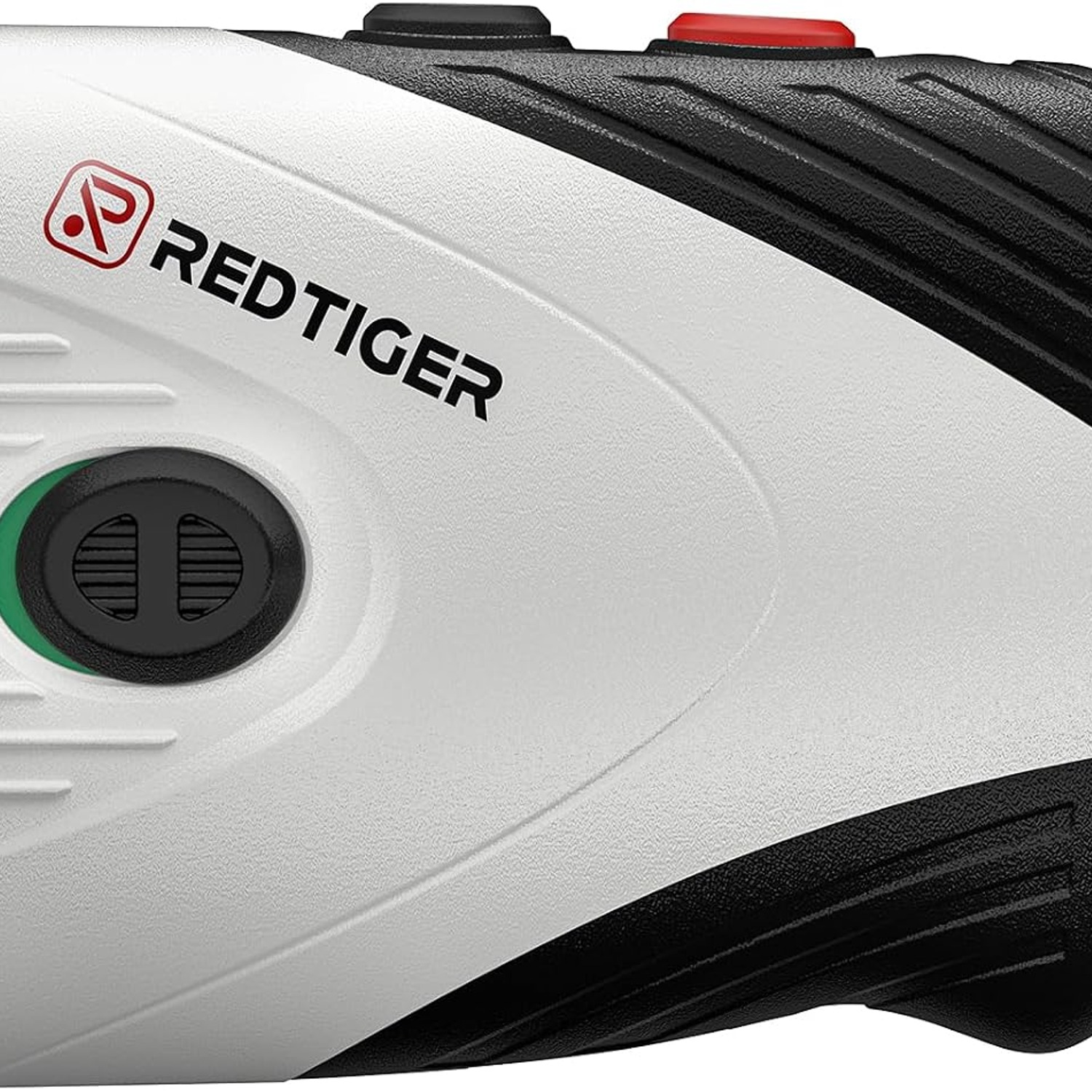
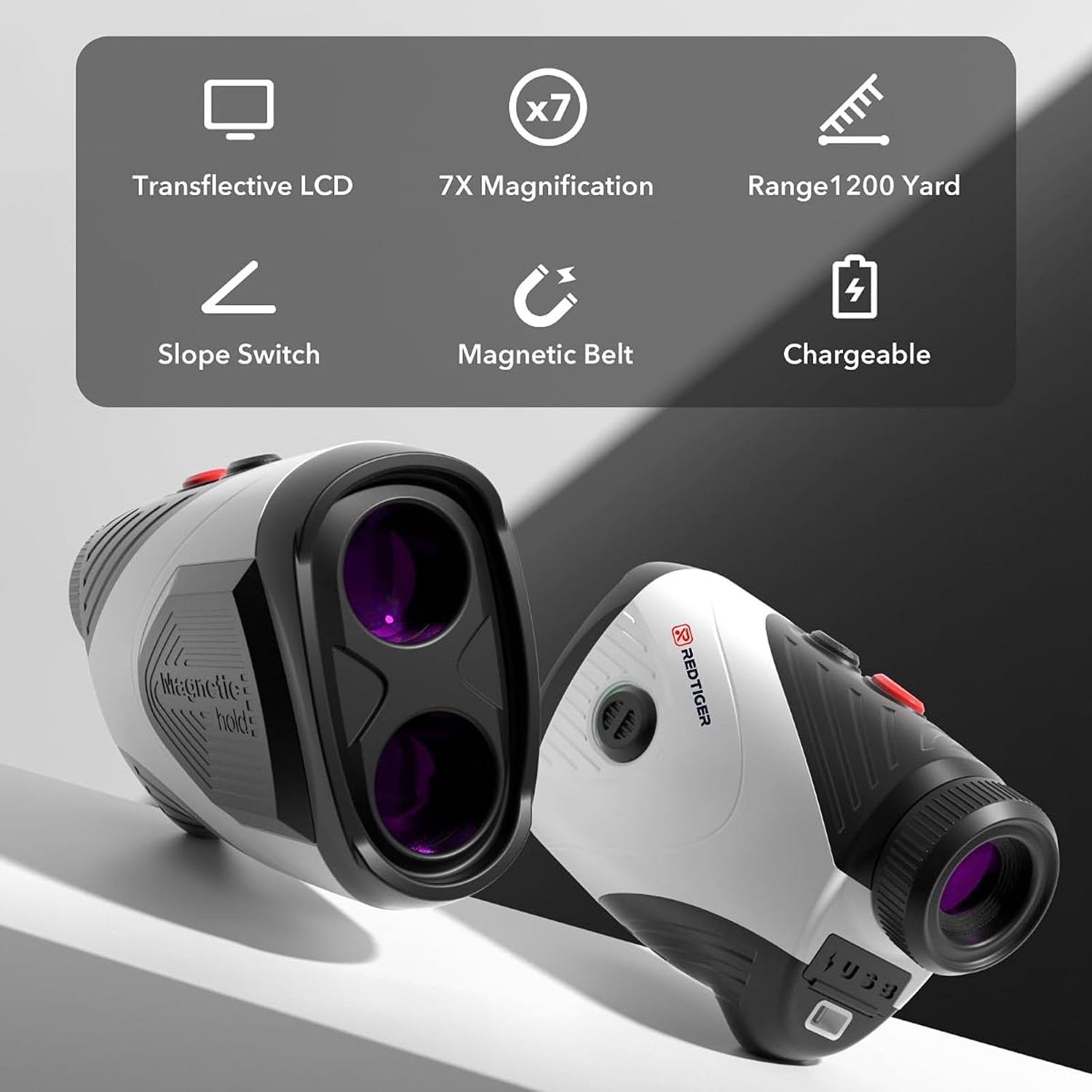
This model combines laser measurement with slope switching, flag-lock vibration and rechargeable power. It also comes with carrying accessories and a soft case. Those features are worth considering, but so are the gaps in the maker's details. This guide explains what is listed, what needs checking and how to decide whether the device fits your routine.
Start with the distance problem you want to solve
Before comparing features, think about when you reach for a distance reading. You might want to check the flag during a round, compare targets during practice or understand how a change in elevation affects a shot decision.
A laser golf rangefinder is aimed at a target. That makes choosing the target part of the task. A reading is most useful when you know what you have aimed at and understand which mode is active.
This product lists several modes, so it is worth deciding which ones you will actually use. If flag distance is your main concern, learn the flag-lock controls first. Extra functions can wait until the basic routine feels familiar.
What slope switching adds
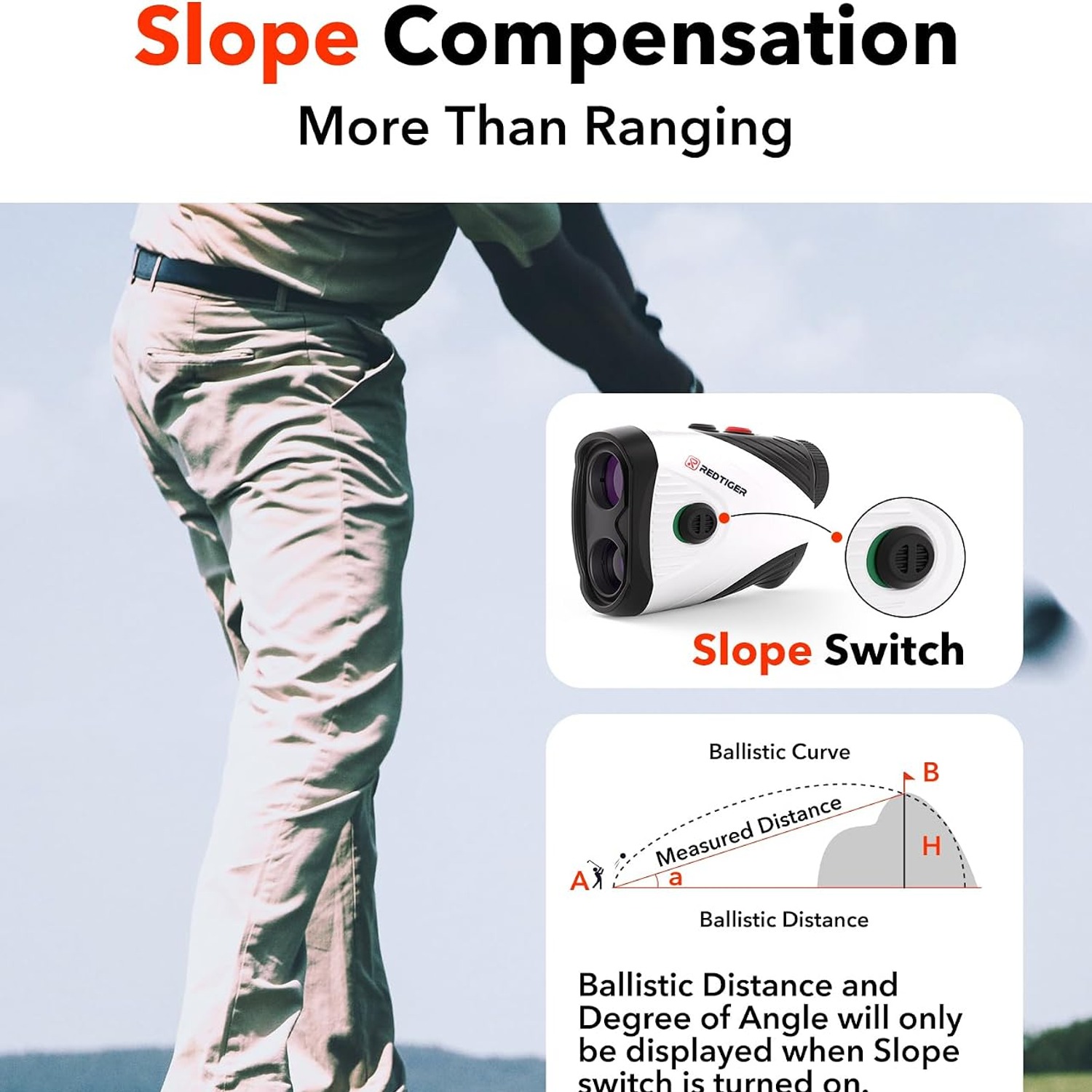
Slope compensation accounts for the difference in elevation between you and the target when calculating a distance. That can add context on ground that rises or falls, rather than leaving you to judge the slope entirely by eye.
This slope switching rangefinder lets you choose whether to use that function. The important habit is to check the active setting before reading the result. A slope-adjusted figure and a direct distance do not describe exactly the same thing.
Do not assume that a slope switch makes a device suitable for every organized round. No competition approval is confirmed here. Check with the organizer about both the equipment and the settings allowed before play.
Understanding flag lock and vibration
A rangefinder with flag lock is intended to help you identify the flag as a target. This model lists vibration feedback when lock is registered, giving you a physical cue as well as information on the display.
That feedback is useful to understand, but it should not replace careful aiming. If a reading looks out of place, pause and check your target and mode. Follow the manual rather than guessing what a symbol or vibration pattern means.
For your first practice session, choose targets that are easy to separate from their surroundings. The aim is to learn the controls and feedback without also trying to interpret a crowded view.
Viewing through the 7x optics
The listed magnification is 7x, and the device uses a transflective LCD. Magnification helps frame a distant target, while the display presents the measurement information.
Those details do not tell you everything about the viewing experience. Eye relief, display resolution and brightness adjustment are not specified by the maker. If any of those matters to you, ask for confirmation before buying.
A 7x golf rangefinder still needs to feel comfortable in use. Think about how you will hold it, read the display and put it away between shots. A feature list cannot fully answer those practical questions, especially if you have specific viewing needs.
Read the range figures carefully
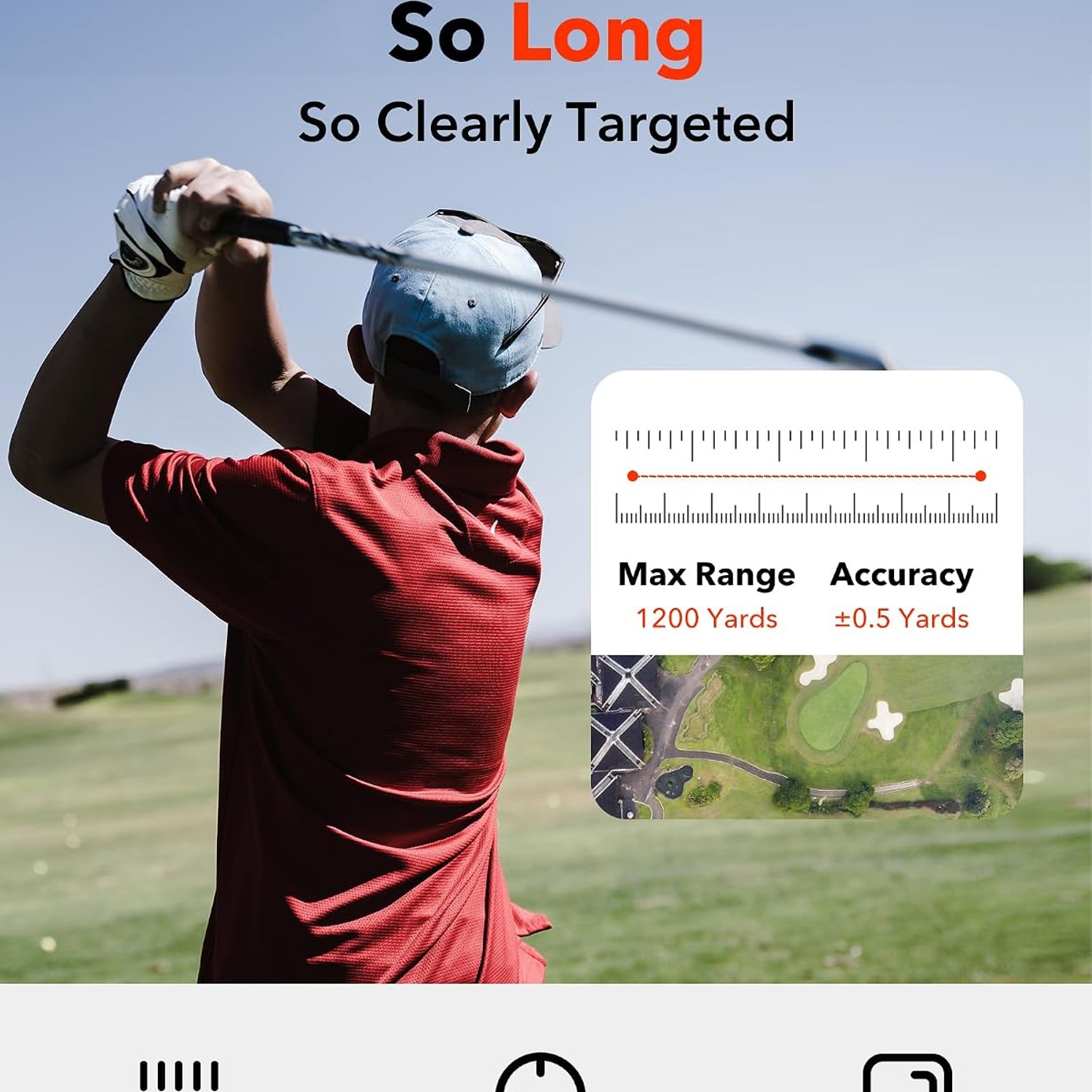
There is an important conflict in the supplied range information. The detailed specification table lists 5–1000 yards. The descriptive copy instead lists 5–1200 yards.
This page does not treat the larger figure as a verified limit. If your purchase depends on measuring a particular distance, get that requirement confirmed first. It is better to settle the question before ordering than to rely on the most generous number.
Also separate maximum measuring range from your usual use. Think about the targets you expect to measure and the conditions in which you will use the device. A headline distance alone is not enough to establish whether a rangefinder suits your needs.
Choose modes you will understand and use
The listed modes cover slope compensation, flag locking, horizontal ranging, height ranging, speed measuring and continuous scan. Measurements can be shown in yards or meters.
That is a broad set of functions for a handheld golf distance measuring device. Still, having more modes only helps if you can select the right one and understand its result.
Read the mode section of the manual before taking the device onto the course. Check how units are changed as well. A reading in the wrong unit can be confusing even when the device is working as intended.
There is no need to learn every function at once. Build a clear routine around the measurements you need most, then try the other modes during practice.
Think about carrying it between shots
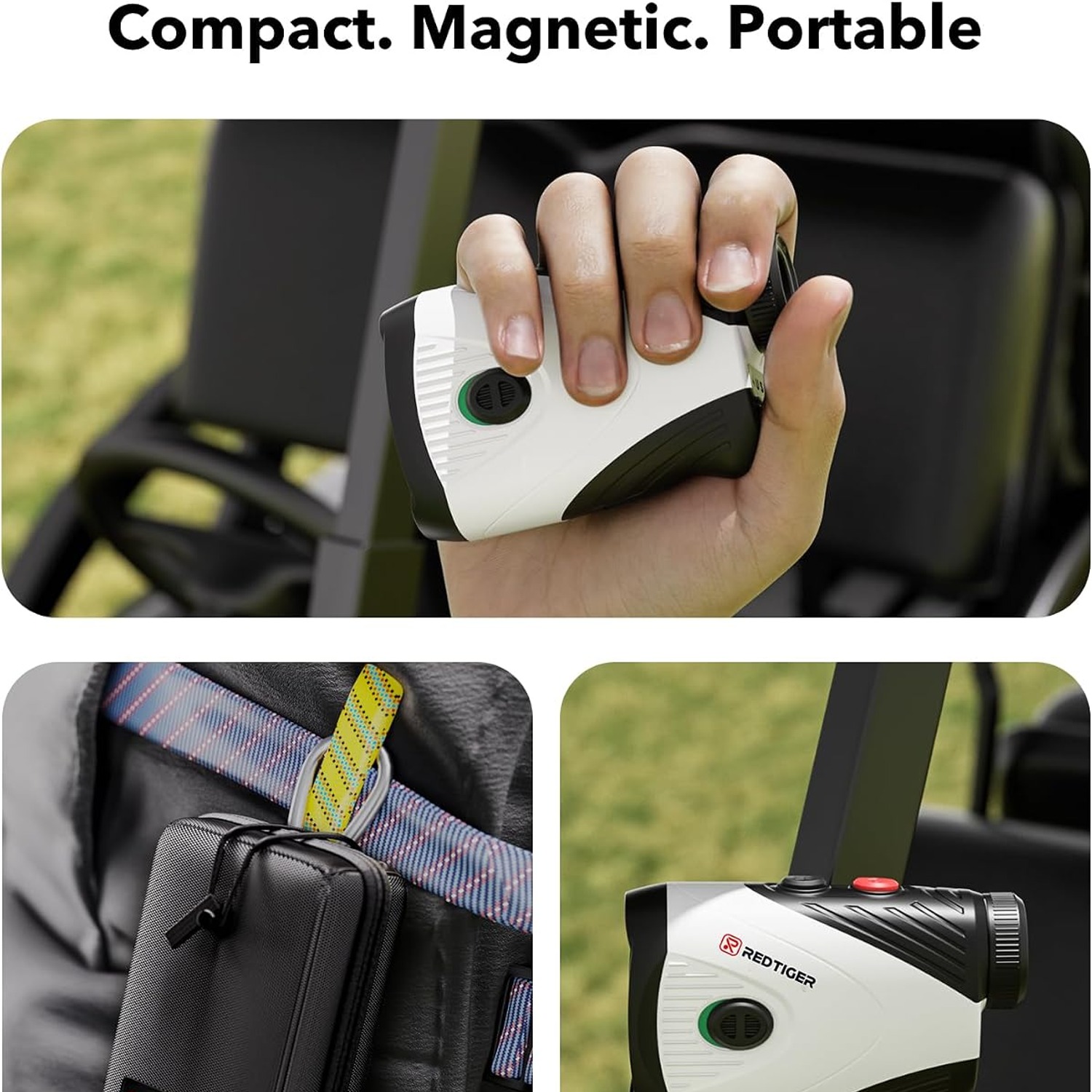
A portable golf rangefinder needs a place to live during a round. This model lists magnetic attachment, a magnetic belt clip, a mountaineering buckle and a hand rope. A portable soft case is also included.
These give you different carrying options, but consider your own setup. You may want the device on a suitable metal cart surface, attached to a belt or stored in a bag pocket.
Check the hold on any surface before relying on the magnet. Suitable metal surfaces can differ in shape and finish, and the maker's description does not provide a holding-force figure. Make checking for the device part of your routine when leaving a cart or packing away.
Check size and charging needs
The detailed dimensions are 4.17 inches long, 1.61 inches wide and 2.36 inches high. The listed weight is 0.18 kg. Compare the dimensions with the pocket or storage area you plan to use rather than assuming it will fit.
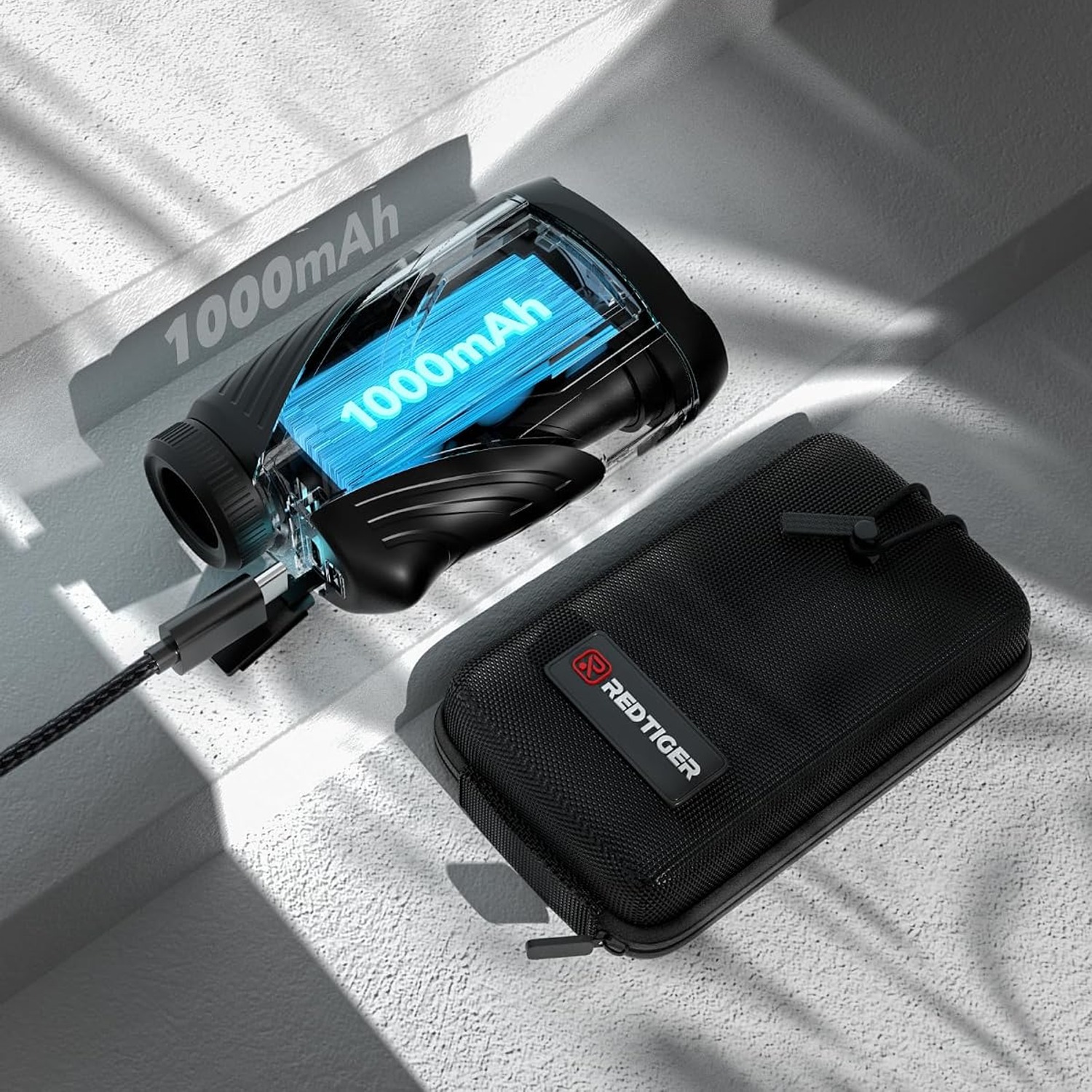
This rechargeable golf rangefinder has a lithium-ion battery and a USB-C charging connection. A charging cable is listed in the box, but a wall adapter is not.
A verified runtime per charge is not specified by the maker. If you need a device for several rounds away from a power source, ask for more information before purchase. Follow the manual for charging requirements, and check the battery as part of your pre-round preparation.
Treat the water-resistance details with care
The source information gives conflicting protection ratings. IP54 appears in some text, while IPX4 appears in the detailed specifications. A general waterproof label also appears, but it does not resolve the difference.
For that reason, do not assume the device can be immersed or left exposed to wet conditions. Confirm the actual rating if rain protection is a key buying requirement.
Whatever the confirmed rating, sensible care still matters. Keep the charging connection dry, wipe moisture from the housing and dry the device before putting it in its case. Water resistance is not a reason to put away wet equipment and forget about it.
Care for the optics and accessories
The included lens cloth gives you a dedicated item for gentle lens care. Follow the manual and avoid abrasive materials. A dirty lens is a reason to clean carefully, not to rub harder.
Use a soft cloth on the housing and check that the device is dry before storage. Keep the case clear of grit that could come into contact with the optics.
It is also worth checking the hand rope, clip and other carrying parts during normal use. Store the charging cable somewhere you can find it before the next round. Small habits make ownership simpler without requiring a complicated maintenance routine.
Decide whether it suits the golfer
This model may interest golfers who want slope switching, flag-lock feedback and magnetic carrying options in one device. It may also suit someone seeking a golf rangefinder for practice who wants to explore more than a single measuring mode.
It is not described as a GPS course-mapping device. Course maps, location tracking and phone connectivity are not specified, so do not buy it expecting those functions.
For a gift, check what the golfer already owns and what they would like to change. A golf rangefinder with case may be useful, but personal preferences about controls, carrying and charging still matter. Confirming those preferences can be more helpful than choosing by feature count.
Check the purchase details
A two-year unconditional warranty is listed. The full terms and claim process are not given by the maker by the maker, so request them if warranty support is central to your decision.
Review the delivery information for your address before ordering, particularly if the purchase is for a dated gift or trip.
Change-of-mind returns are available for 14 days from delivery, with the customer paying return postage. Your rights under the consumer protection law of your state also apply. Read the return instructions before sending anything back.
The short version
This Golf Rangefinder with Slope lists useful features for distance checking, including 7x magnification, flag-lock vibration, USB-C charging and magnetic attachment. Carrying and care accessories are included.
The range and water-resistance figures need confirmation because the maker's details conflict. Settle those points, check the delivery information and decide whether the controls and carrying options fit the way you play.