
The complete guide
Choosing an Indoor Putting Mat for Your Space
Give putting practice a place at home
Getting to a practice green takes time. At home, the challenge is often simpler: finding somewhere to putt without clearing the whole room or aiming at a makeshift target. An indoor golf putting mat gives that activity a defined space.
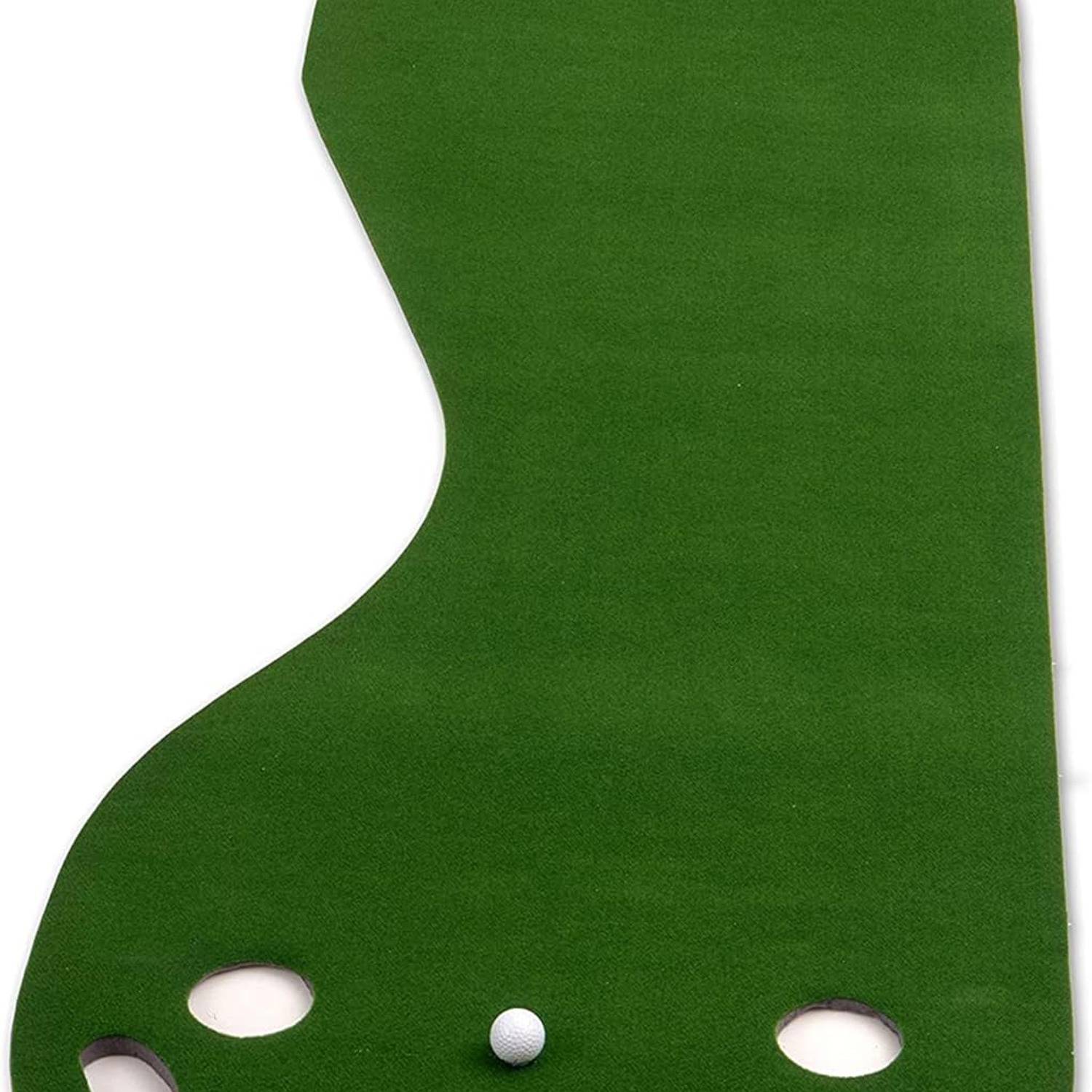
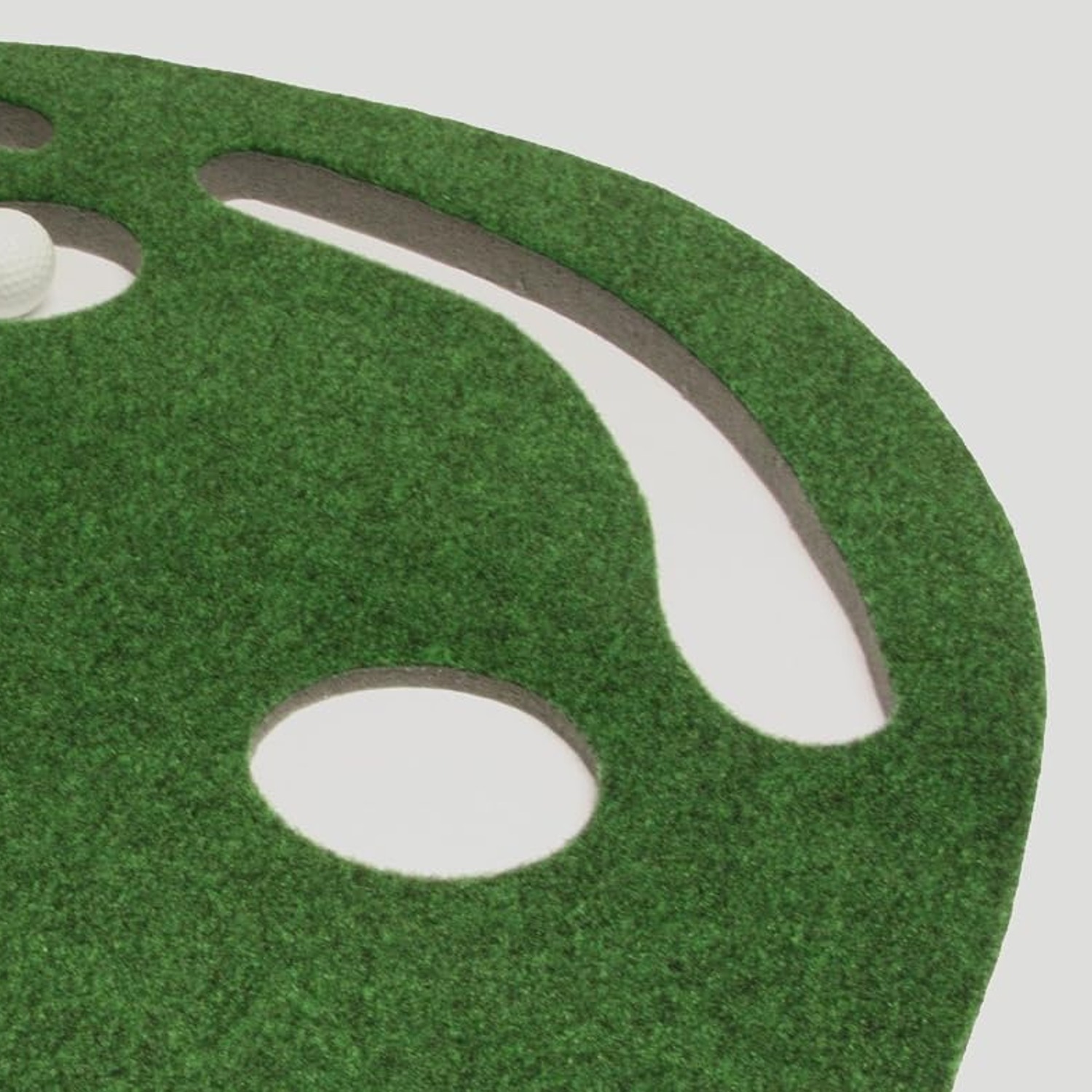
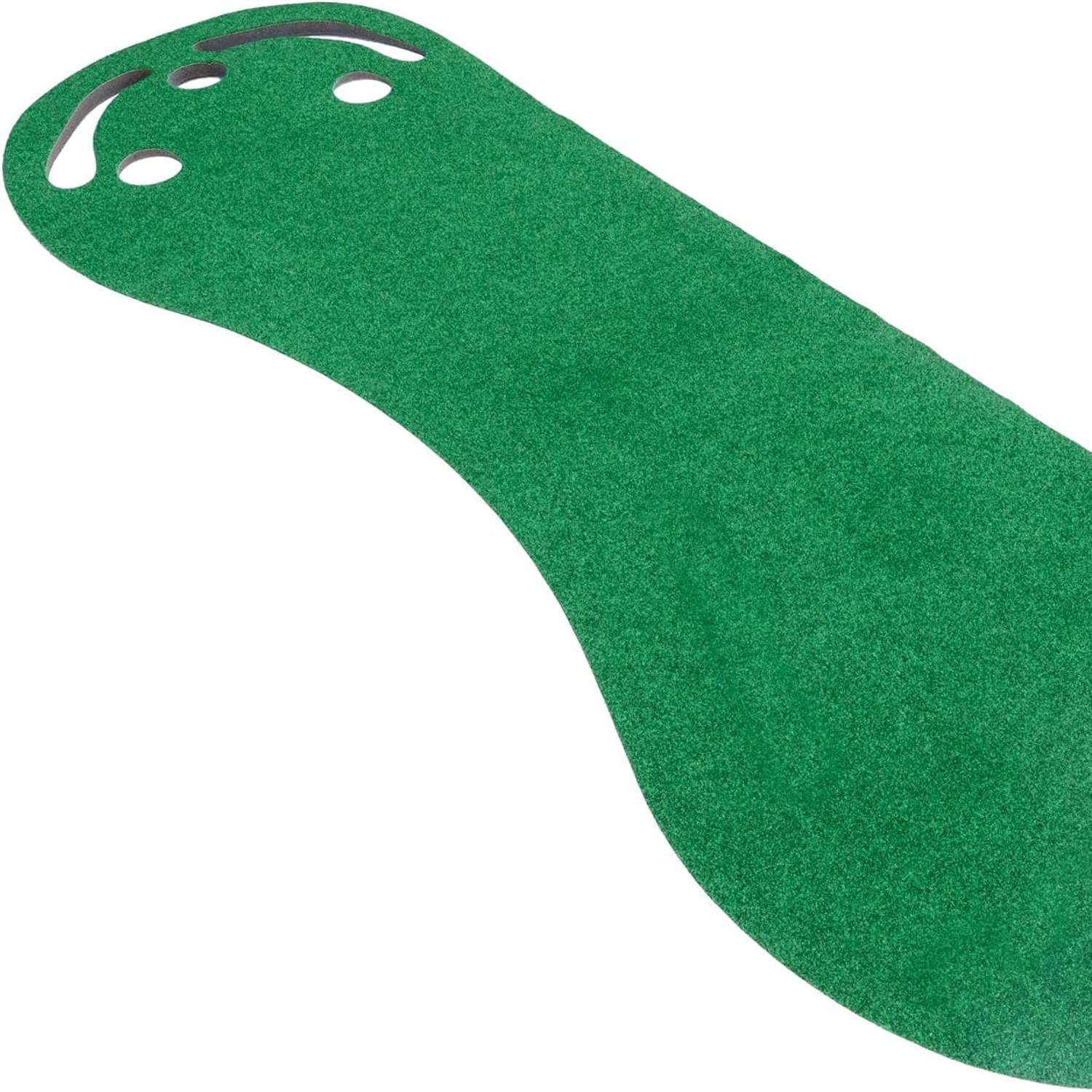
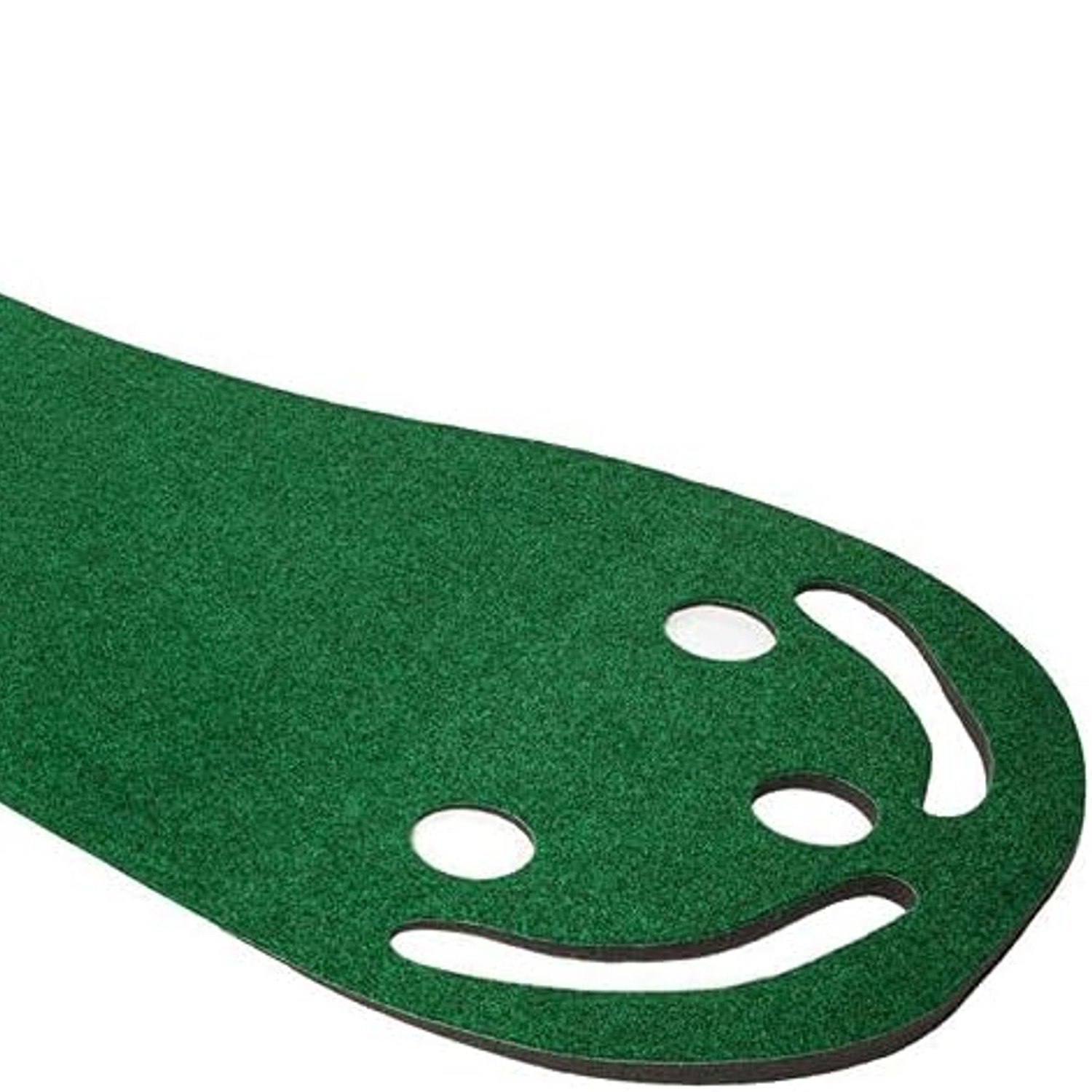
This model is a kidney-shaped practice green with a listed footprint of 3 by 9 feet. Its description identifies three cup cutouts and built-in sand-trap areas designed to catch missed shots. It is also listed as foldable, which matters if your practice space serves another purpose during the day.
The first buying decision is not about your skill level. It is whether the mat fits your room and the way you want to practice. Measure carefully, check the layout, and avoid assuming that accessories or features are included just because other mats have them.
Understand the layout before choosing
A shaped home putting green offers a different setup from a narrow straight strip. Here, the kidney-shaped outline provides a practice area with several described cup targets. You can choose a target, make a few attempts, then move your attention to another cup.
The built-in sand-trap areas are described as places to catch missed shots. That is useful context, but it is not the same as a stated automatic return system. If your main reason for shopping is to have each ball come back to your feet, confirm that detail before ordering.
There is also a count worth checking. The description names three cup cutouts, while the specification table lists five holes. Those entries may refer to different parts of the layout, but the maker's description does not explain the difference. Ask for confirmation if the exact number of targets will decide your purchase.
Measure more than the mat itself
The listed floor dimensions are 108 inches long and 36 inches wide. In everyday terms, that is a nine foot putting mat with a three-foot width. Mark that area on your floor before you buy, especially if you plan to use a spare room or shared living area.
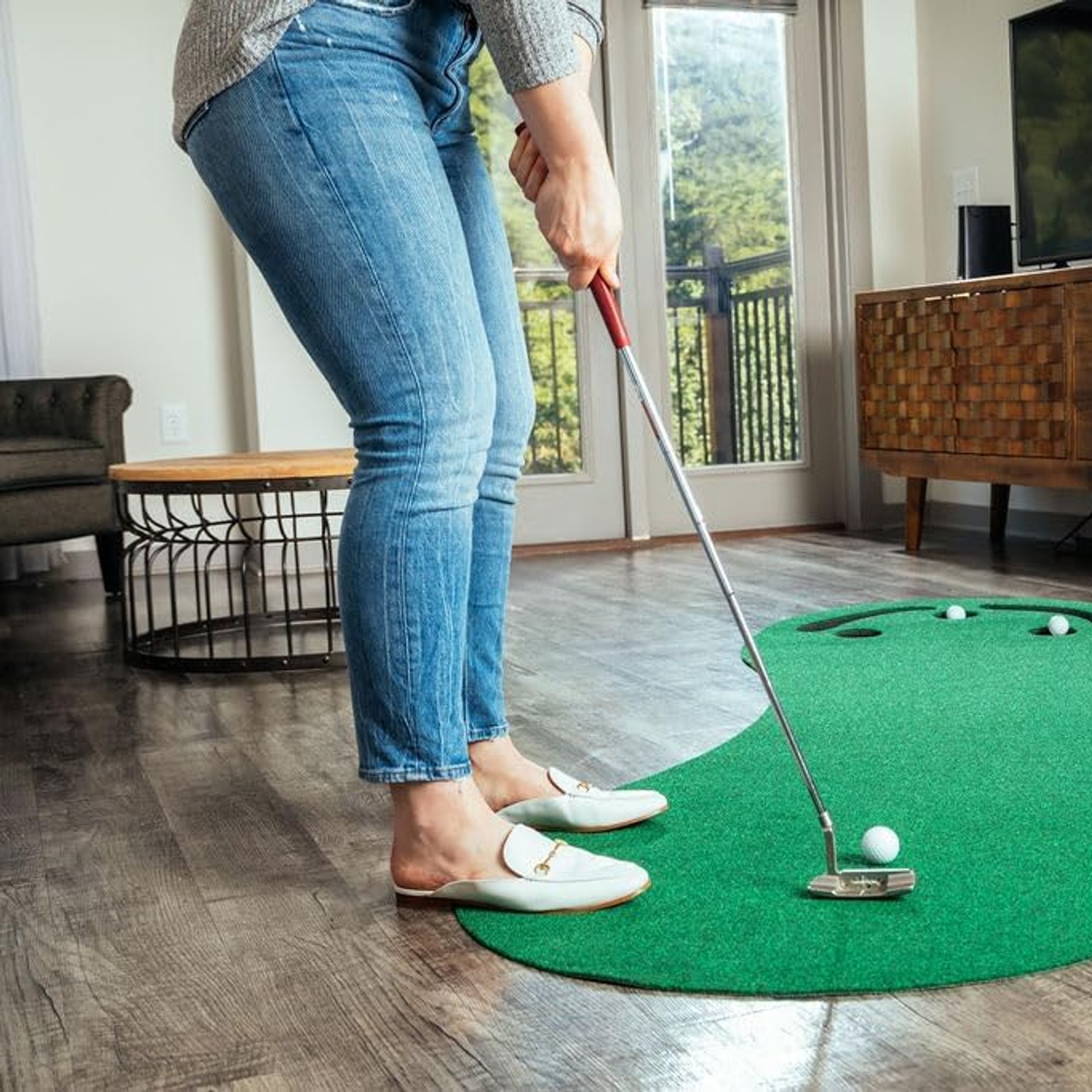
Then stand next to the marked space as you would when putting. You need room for your feet, your body position, and the putter movement. A mat can fit between pieces of furniture while still leaving too little room for a comfortable setup.
Check nearby doors and common walking routes as well. You should not need to move the mat halfway through each session because someone needs access to a cupboard. A workable location makes more sense than a tight fit that looks good only on paper.
The dimensions entry also lists a thickness of 2 inches. It does not explain whether that measurement applies throughout the mat or to one section. Keep that uncertainty in mind when planning storage under furniture.
Know what the materials tell you
The detailed specifications list PET resin as the material and rubber as the backing. Green is the stated color. These are useful construction details, but they do not tell you everything about how a putt will feel.
For example, no surface-speed rating is supplied. There is no stated match to a particular outdoor green, either. If you want indoor golf equipment that reproduces a known pace, you will need more information than the maker provides.
A rubber backed putting mat also should not be assumed to suit every floor finish. Check the care advice for your flooring, especially before leaving the mat in one place for a long period. The maker does not give floor-specific compatibility details.
Treat the material list as a starting point for comparison. It is not proof of a particular ball roll, grip level, or service life.
Decide whether it suits your practice style
The product description presents this mat for golfers across skill levels. For a newer player, a defined surface and visible targets can give a practice session a clear focus. There is no need to build a complicated routine before you start.
For an experienced player, the buying question may be more specific. Do you want several targets in one setup? Do you have a room where the mat can stay out? Are you comfortable choosing without a stated surface-speed rating?
A putting mat for beginners does not have to be limited to beginners. At the same time, a practice mat is not a coaching program. This product does not promise a score change or a measured improvement in accuracy.
Think about what you will actually do with it during an ordinary week. A manageable space and a simple routine are more useful buying criteria than an ambitious plan you rarely follow.
Set up a simple routine
Start by checking that the surface is lying flat. Clear loose items from the area and choose one cup cutout as your first target. Use a comfortable starting position rather than trying to make every attempt as long as possible.
Keep the first session easy to compare. Make a short set of attempts from the same place, then switch targets. You can note where misses finish without treating each putt as a test you must pass.
Later, change one part of the task at a time. Move your starting position or choose a different target. That gives the session some variety while keeping it clear what you are trying to do.
The mat does not come with a stated training schedule. Build a putting practice routine around the time and space you have, and seek instruction separately if you want help with technique.
Check what comes in the box
The maker lists one item with a unit count of one. It identifies that item as a Par Three Golf Putting Mat. It does not confirm that a putter or golf balls are included.
That distinction matters if this will be your first home practice setup. Before comparing total costs, check whether you already own what you need to use the mat. If you are buying for someone else, ask discreetly about their equipment.
Do not infer extra accessories from a general product name or search phrase. A carrying bag, alignment aid, or training booklet is not confirmed by the maker. The clearest approach is to verify package contents before placing the order.
If one missing accessory would stop you using the mat on arrival, settle that question first.
Think about storage before the first session
The foldable format may suit a room that cannot stay dedicated to golf. Still, “foldable” does not tell you the packed dimensions or the correct fold pattern. Those details are not given by the maker by the maker.
Choose a storage spot with enough room to avoid forcing the mat into a tight space. Follow any instructions that arrive with it, and do not assume that repeated folding in any direction is recommended.
Before putting it away, remove loose debris and make sure the mat is dry. When you set it out again, check the surface before starting your next session.
If you expect to move it every day, consider the whole process. Clearing the room, laying it out, and putting it away should fit comfortably into the time you have for practice.
Keep care straightforward
No detailed cleaning method is given, so start gently. A soft brush can remove loose dust and debris without introducing a cleaning product that may not suit the surface.
Avoid harsh cleaners unless the supplied care directions allow them. If something spills, check those directions before deciding how to treat the area. Do not assume that the mat is machine washable.
Indoor use is the stated purpose. Weather resistance and outdoor storage suitability are not specified, so a patio or exposed garage should not be treated as an approved location.
Basic care also means checking the practice area itself. Keep the floor clear, look for uneven sections after setup, and address any issue before continuing.
Buying as a gift or for a shared room
A golf gift is easier to choose when you know the recipient has space for it. A 3-by-9-foot footprint is worth discussing rather than leaving as a surprise detail after the box arrives.
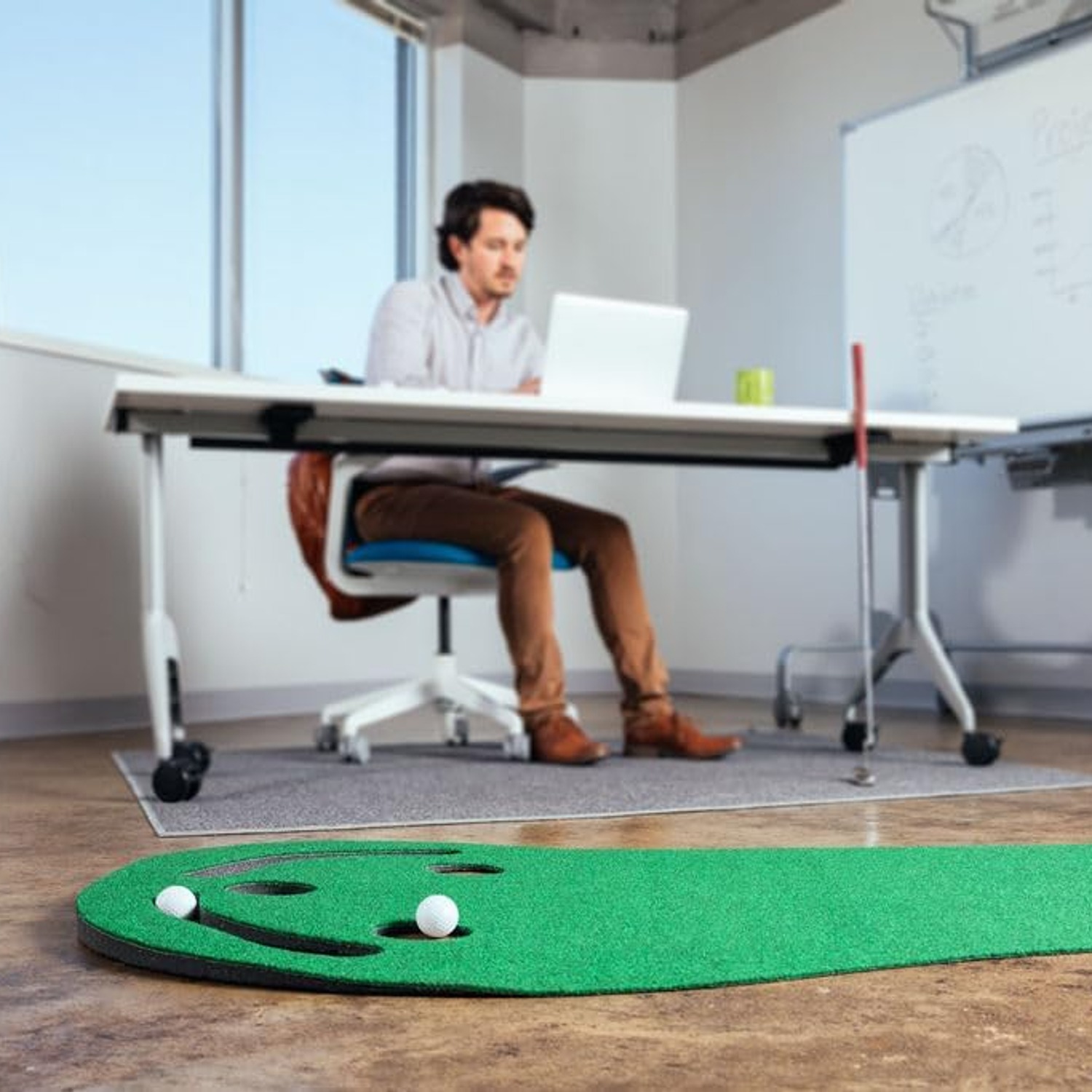
For a shared home, agree on where the mat will go and where it will be stored. For an office putting mat, check workplace rules and keep normal access routes clear. Not every open patch of floor is a practical practice spot.
Delivery timing is not stated by the maker. Check the estimate for the destination if the purchase is tied to a birthday or another date.
Also confirm current return terms. The supplied store terms describe a 14-day change-of-mind period from delivery with customer-paid return postage, while a maker specification mentions 90 days. Use the applicable store policy when planning your purchase.
The short version
Choose this golf putting practice mat if its kidney-shaped layout, described cup targets, and foldable format suit your plans. Start with the measurements, then allow extra space for your stance.
Confirm the hole layout, package contents, and any return feature you need. With those details settled, you can judge the mat on what is actually listed rather than on assumptions about other practice greens.